Contents
- 1 Trust Wallet vs MetaMask: Overview
- 2 Multi-Chain Support and Token Compatibility
- 3 Mobile Experience and User Interface
- 4 Security Features and Self-Custody
- 5 DeFi and Web3 Integration
- 6 NFT Support and Digital Collectibles
- 7 Staking and Earning Opportunities
- 8 Which Wallet Should You Choose?
- 9 Conclusion
- 10 Frequently Asked Questions
Choosing the right cryptocurrency wallet can make or break your Web3 experience. With thousands of digital assets across multiple blockchains and an ever-expanding ecosystem of decentralized applications, you need a wallet that’s both secure and user-friendly. Two of the most popular options are Trust Wallet and MetaMask, each offering unique advantages for different types of crypto users.
Trust Wallet stands out as a comprehensive mobile-first solution, supporting over 10 million tokens across 100+ blockchains with an intuitive interface designed for everyone from beginners to advanced DeFi users. MetaMask, on the other hand, pioneered browser-based Web3 access and remains a favorite among desktop users and Ethereum enthusiasts.
In this Trust Wallet vs MetaMask comparison, you’ll discover the key differences between these two self-custodial wallets, their unique features, security approaches, and which one might be the best fit for your cryptocurrency journey. Whether you’re new to crypto or looking to optimize your current setup, this analysis will help you make an informed decision.
Trust Wallet vs MetaMask: Overview
Both Trust Wallet and MetaMask are self-custodial wallets, meaning you maintain complete control over your private keys and digital assets. However, they take different approaches to serving the Web3 community.
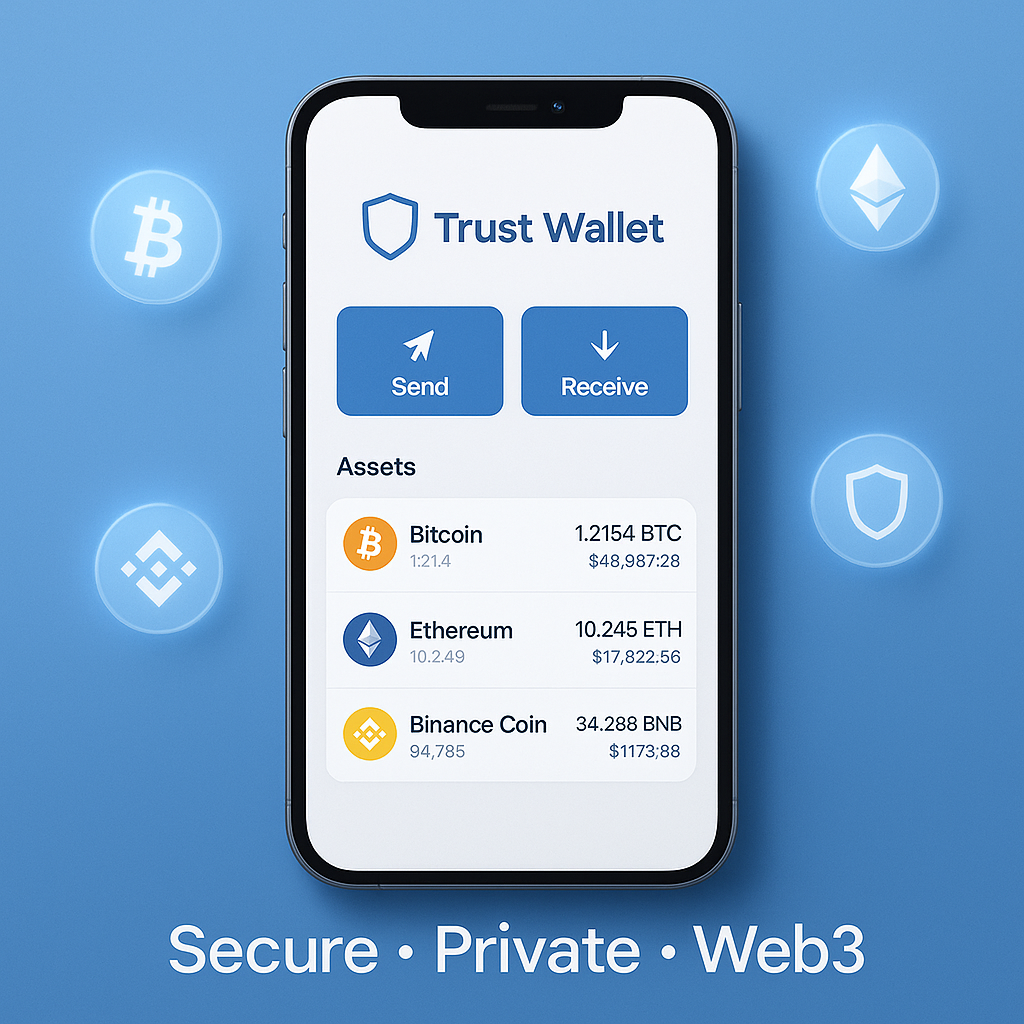
Trust Wallet is a mobile-first cryptocurrency wallet backed by Binance, designed to simplify multi-chain asset management. It combines a sleek mobile interface with comprehensive blockchain support, making it accessible to users who prefer managing crypto on their smartphones. The wallet includes a built-in DApp browser, NFT gallery, staking features, and direct crypto purchasing options.
MetaMask began as a browser extension focused primarily on Ethereum and has since expanded to include mobile apps and additional blockchain networks. It’s widely recognized for pioneering browser-based Web3 interactions and remains a standard tool for Ethereum developers and DeFi enthusiasts.
The fundamental difference lies in their primary platforms and user experience philosophy. Trust Wallet prioritizes mobile accessibility and multi-chain simplicity, while MetaMask emphasizes browser integration and Ethereum ecosystem depth.
Multi-Chain Support and Token Compatibility
When comparing Trust vs MetaMask in terms of blockchain support, Trust Wallet takes a clear lead with native support for over 100 blockchains and more than 10 million tokens. This extensive multi-chain wallet capability means you can manage Bitcoin, Ethereum, Binance Smart Chain, Polygon, Solana, Avalanche, and dozens of other networks from a single interface.
Trust Wallet’s approach to multi-chain support is seamless – you simply add tokens or switch networks with a few taps, without complex configuration. Popular networks like BSC, Polygon, and Arbitrum work out of the box, making it an ideal choice for users who trade across multiple ecosystems.
MetaMask originally focused on Ethereum but now supports various EVM-compatible chains through custom network additions. While you can add networks like BSC, Polygon, or Avalanche, the process requires manual configuration including RPC URLs, chain IDs, and network parameters. This approach gives advanced users more control but creates barriers for newcomers.
For users seeking the best mobile crypto wallet experience across multiple blockchains, Trust Wallet’s plug-and-play approach to network support provides significant advantages in both convenience and accessibility.
Mobile Experience and User Interface
The mobile wallet comparison between Trust Wallet and MetaMask reveals distinct design philosophies. Trust Wallet was built from the ground up as a mobile application, resulting in an intuitive interface optimized for touchscreen navigation and smartphone usage patterns.
Trust Wallet’s mobile interface features clear visual hierarchy, large buttons for easy tapping, and streamlined workflows for common actions like sending tokens, swapping assets, or browsing DApps. The dashboard provides at-a-glance portfolio overview with clean charts and organized token lists. Navigation feels natural to smartphone users, with familiar gestures and layouts.
The wallet includes specialized mobile features like camera integration for QR code scanning, biometric authentication for quick access, and optimized transaction confirmations that work well on smaller screens. These details matter when you’re managing crypto on the go.
MetaMask’s mobile app, while functional, translates a browser-extension experience to mobile format. The interface can feel dense on smaller screens, with more complex navigation paths for certain actions. Advanced users might appreciate the detailed transaction data and extensive settings, but newcomers often find the interface overwhelming.
For users prioritizing mobile-first cryptocurrency wallet functionality, Trust Wallet delivers a more refined and accessible experience designed specifically for smartphone usage.
Security Features and Self-Custody
Both Trust Wallet and MetaMask implement strong security practices as self-custodial wallets, ensuring users maintain complete control over their private keys and digital assets. Neither platform stores your recovery phrase or private keys on their servers.
Trust Wallet employs industry-standard security measures including client-side key generation, encrypted storage, and secure backup procedures. The wallet uses your device’s secure enclave for key storage and supports biometric authentication (fingerprint and face recognition) for convenient yet secure access. Your 12-word recovery phrase is generated offline and never transmitted to Trust Wallet servers.
Additional Trust Wallet security features include transaction simulation for smart contract interactions, phishing protection through verified DApp listings, and security alerts for suspicious activities. The wallet also provides security tips and educational resources to help users avoid common crypto security mistakes.
MetaMask implements similar security fundamentals with client-side key management and encrypted storage. It offers additional features like hardware wallet integration (Ledger, Trezor) and more granular permission controls for DApp interactions. Advanced users might appreciate MetaMask’s detailed transaction data and customizable security settings.
Both wallets require users to safely store their recovery phrases and practice good security hygiene. The key difference lies in accessibility – Trust Wallet’s security features integrate more seamlessly into the mobile experience, while MetaMask provides more granular controls that appeal to technically sophisticated users.
DeFi and Web3 Integration
Trust Wallet’s built-in DApp browser provides seamless access to thousands of decentralized applications across multiple blockchain networks. The browser is optimized for mobile use, with touch-friendly interfaces and simplified connection flows that make DeFi accessible to users regardless of technical expertise.
Popular DeFi protocols like Uniswap, PancakeSwap, Aave, and Compound integrate smoothly with Trust Wallet’s mobile browser. The wallet automatically handles network switching when you navigate between applications on different chains, eliminating technical barriers that often frustrate new DeFi users.
Trust Wallet also includes built-in swap functionality powered by multiple DEX aggregators, allowing you to trade tokens directly within the wallet interface. This integrated approach reduces the need to navigate external applications for basic trading needs.
MetaMask pioneered browser-based Web3 interactions and remains the standard for desktop DeFi usage. Its browser extension seamlessly integrates with Web3 sites, providing smooth connection experiences for Ethereum-based applications. Many DeFi protocols optimize their interfaces specifically for MetaMask users.
For mobile DeFi usage, Trust Wallet offers advantages through its mobile-optimized browser and streamlined user flows. Desktop DeFi users often prefer MetaMask for its mature browser integration and extensive protocol compatibility.
NFT Support and Digital Collectibles
Trust Wallet includes a comprehensive NFT wallet with a built-in gallery that automatically displays your digital collectibles across supported blockchains. The NFT viewer supports images, videos, and metadata from popular marketplaces like OpenSea, and automatically detects NFTs in your wallet without manual imports.
The mobile NFT gallery provides an Instagram-like browsing experience, making it easy to view, organize, and share your digital collectibles. Trust Wallet supports NFTs across multiple chains including Ethereum, BSC, Polygon, and Solana, providing comprehensive coverage for most NFT ecosystems.
You can send and receive NFTs directly through the wallet interface, with clear transaction confirmations and gas fee estimates. The wallet also integrates with popular NFT marketplaces through its DApp browser, allowing you to buy, sell, and trade collectibles without switching applications.
MetaMask displays NFTs in its mobile app and provides basic viewing and transfer functionality. However, the NFT experience feels more utilitarian compared to Trust Wallet’s gallery-focused approach. MetaMask users often rely on external tools or marketplaces for comprehensive NFT management.
For users who actively collect or trade NFTs, Trust Wallet provides a more polished and feature-rich experience designed specifically for digital collectible enthusiasts.
Staking and Earning Opportunities
Trust Wallet offers integrated staking services for multiple proof-of-stake networks, allowing users to earn rewards directly within the wallet interface. Supported staking options include popular networks like Ethereum 2.0, Binance Smart Chain, Cosmos, Tezos, and many others.
The staking interface simplifies complex processes into user-friendly workflows. You can stake tokens with just a few taps, monitor rewards in real-time, and understand estimated annual returns without navigating external platforms. Trust Wallet handles validator selection and technical details while providing transparency about fees and risks.
Beyond staking, Trust Wallet integrates earning opportunities through partnerships with DeFi protocols. Users can access yield farming, liquidity providing, and lending services through the built-in DApp browser with pre-vetted and popular protocols highlighted for safety.
MetaMask doesn’t include built-in staking features, requiring users to navigate external protocols and platforms for earning opportunities. While this approach provides more flexibility and options, it also creates additional complexity and research requirements for users seeking to earn yield on their crypto holdings.
For users interested in passive crypto earning with minimal complexity, Trust Wallet’s integrated approach provides clear advantages in accessibility and user experience.
Which Wallet Should You Choose?
The choice between Trust Wallet and MetaMask depends on your specific needs, experience level, and preferred usage patterns.
Choose Trust Wallet if you:
- Prefer managing crypto on mobile devices
- Want access to multiple blockchain networks without technical configuration
- Are new to cryptocurrency or DeFi and value simplicity
- Actively collect or trade NFTs
- Want built-in staking and earning features
- Prefer an all-in-one solution for crypto management
- Need customer support and educational resources
Choose MetaMask if you:
- Primarily use desktop computers for DeFi interactions
- Are heavily invested in the Ethereum ecosystem
- Prefer maximum control over wallet configurations
- Use hardware wallets for additional security
- Are comfortable with technical setup and troubleshooting
- Need specific features for development or advanced trading
Many experienced crypto users actually use both wallets for different purposes – Trust Wallet for mobile convenience and multi-chain asset management, MetaMask for desktop DeFi interactions and Ethereum-focused activities.
Conclusion
In the Trust Wallet vs MetaMask comparison, both wallets excel in different areas and serve distinct user needs within the Web3 ecosystem. Trust Wallet shines as the best mobile crypto wallet for users who prioritize simplicity, multi-chain support, and comprehensive mobile features. Its intuitive interface, extensive blockchain coverage, and integrated services make it an excellent choice for both beginners and experienced users who prefer mobile-first crypto management.
MetaMask remains a powerful tool for desktop-focused users and Ethereum enthusiasts who value granular control and extensive customization options. Its pioneering role in Web3 browser integration continues to make it indispensable for many DeFi power users.
For most users, especially those new to cryptocurrency or those who primarily use mobile devices, Trust Wallet offers the most accessible and feature-complete experience. Its combination of security, simplicity, and comprehensive blockchain support makes it an ideal gateway to the world of decentralized finance and Web3.
Ready to experience the simplicity and power of multi-chain crypto management? Download Trust Wallet today and join millions of users who trust it with their digital assets. Your journey into Web3 starts with taking control of your crypto, and Trust Wallet makes that control accessible to everyone.
Frequently Asked Questions
Is Trust Wallet safer than MetaMask?
Both Trust Wallet and MetaMask are self-custodial wallets with strong security practices. They use client-side key generation, encrypted storage, and never store your private keys on servers. Trust Wallet offers mobile-specific security features like biometric authentication, while MetaMask provides hardware wallet integration. Both are considered secure when used properly with good security practices.
Can I use the same recovery phrase for both Trust Wallet and MetaMask?
Yes, both wallets use standard BIP39 recovery phrases, so you can import your wallet between them. However, some features like custom networks or specific token additions may not transfer automatically. Always test with small amounts when switching between wallets.
Which wallet supports more cryptocurrencies?
Trust Wallet supports over 10 million tokens across 100+ blockchains with native multi-chain integration. MetaMask primarily focuses on Ethereum and EVM-compatible chains, though you can manually add other networks. For comprehensive multi-chain support, Trust Wallet offers broader native compatibility.
Do both wallets cost money to use?
Both Trust Wallet and MetaMask are free to download and use. You only pay standard blockchain network fees (gas fees) for transactions. Neither wallet charges additional fees for basic sending, receiving, or storage functionality.
Can I stake cryptocurrency in both wallets?
Trust Wallet includes built-in staking features for multiple proof-of-stake networks with simple interfaces for earning rewards. MetaMask doesn’t have integrated staking, requiring users to access external staking platforms through DApps. Trust Wallet provides a more streamlined staking experience.
Which wallet is better for NFTs?
Trust Wallet offers a dedicated NFT gallery with automatic detection and display across multiple blockchains, providing an optimized viewing and management experience. MetaMask displays NFTs but with more basic functionality. For active NFT collectors, Trust Wallet provides superior NFT management features.
Are there customer support differences between the wallets?
Trust Wallet, backed by Binance, offers comprehensive customer support through multiple channels including help center, community forums, and direct support. MetaMask provides community-based support and documentation. Trust Wallet generally offers more structured customer support resources.
Can I use DApps with both wallets?
Yes, both wallets support decentralized applications. Trust Wallet includes a built-in mobile-optimized DApp browser, while MetaMask pioneered browser extension integration with Web3 sites. Trust Wallet excels for mobile DApp usage, while MetaMask is preferred for desktop DeFi interactions.
Which wallet is better for beginners?
Trust Wallet is generally more beginner-friendly with its intuitive mobile interface, automatic network configuration, and built-in educational resources. The wallet simplifies complex crypto operations into easy-to-understand workflows. MetaMask, while powerful, has a steeper learning curve and requires more technical knowledge for optimal use.
Do both wallets work on all devices?
Trust Wallet is primarily mobile-focused with apps for iOS and Android, though it also offers a browser extension. MetaMask started as a browser extension for desktop computers and later added mobile apps. Trust Wallet provides the better mobile experience, while MetaMask excels on desktop browsers.


Just what I needed, the comparison section was especially helpful and informative. Will follow your recommendations. Thanks again! Great resource. Great resource. Highly recommend. Highly recommend. Highly recommend.
Clear explanations, the explanation of Web3 features. Made everything much clearer. Author did a great job explaining clearly. Very helpful! Very helpful! Well done! Thanks again! Great resource. Thanks again!
Clear explanations, the NFT features section was especially helpful and informative. Perfect resource for this topic. Highly recommend. Very helpful! Highly recommend. Great resource. Great resource. Great resource.
Excellent article, loved the part about NFT support. Everything is clear even for beginners. Great work by the author! Thanks again! Highly recommend. Very helpful! Thanks again! Well done! Well done!
Exactly what I was looking for, particularly useful insights on staking features and DeFi integration. Perfect resource for this topic. Well done! Great resource. Thanks again! Thanks again! Great resource.
Good article for how you covered NFT features. Comprehensive and clear. Will follow your recommendations. Thanks again! Very helpful! Great resource. Great resource. Thanks again! Well done! Very helpful!
Really appreciated the explanation of mobile security. Made everything much clearer. Perfect resource for this topic. Great resource. Thanks again! Thanks again! Well done! Thanks again! Thanks again!
Bookmarked this, how you covered security tips. Comprehensive and clear. Info came in very handy. Well done! Well done! Thanks again! Great resource. Highly recommend. Thanks again! Thanks again! Well done!
Good article for your recommendations on self-custody. Will definitely implement these. Thanks for the detailed explanation! Well done! Thanks again! Thanks again! Very helpful! Very helpful! Thanks again!
Exactly what I was looking for, really helped me understand DeFi integration. Now I know how to stake crypto. Will keep an eye out for new posts! Thanks again! Great resource. Well done! Well done! Thanks again!
Good article for loved the part about Web3 features. Everything is clear even for beginners. Perfect resource for this topic. Thanks again! Highly recommend. Highly recommend. Well done! Great resource.
Finally found the focus on Trust Wallet app. This is exactly what beginners need. Thanks for the detailed explanation! Great resource. Very helpful! Highly recommend. Very helpful! Great resource. Well done!